Thursday, March 16, 2006

Maoist blockade hits Nepal firms


KATHMANDU: A blockade ordered by Maoist rebels kept most vehicles off roads across Nepal for a third straight day on Thursday, disrupting supplies and hitting businesses hard, industry officials and residents said.

The rebels, who have been fighting since 1996 to replace the monarchy with a communist republic, called the blockade of Kathmandu, district capitals and other cities in a bid to end the absolute rule of King Gyanendra, who seized power last year.

Authorities have urged drivers to defy the rebels, offering armed escorts to vehicles willing to risk it, but most roads across the mountainous nation were all but deserted.

"Industries are on the verge of being closed due to the blockade," said Bijay Sarawagi, chief of the Birgunj unit of the Federation of the Nepalese Chambers of Commerce and Industry. Birgunj is a major business centre in the southern plains.

"We can't send our products to the market and bring raw material from outside because transport vehicles are not running," Sarawagi said. "If this situation continues we'll have no alternative but to close down factories."

Trucks carrying goods from India, which supplies the bulk of essential supplies to the landlocked nation, were backed up at border crossings because drivers were scared to defy the Maoists.

"I saw nearly 50 Nepal-bound trucks loaded with goods waiting on the Indian side of the border," journalist Kulmani Gwyanli said from the western town of Bhairahawa, a major trading point along the border with India.

Ordinary Nepalis were also feeling the impact of the blockade.

Kathmandu housewife Lila Poudel said she had stocked 200 kg (440 lbs) of rice for a family of four but was worried that fresh vegetables would soon disappear from the markets.

"The price of tomatoes has more than doubled to 40 rupees (55 US cents) a kilo and prices of other vegetables have also increased by more than 50 percent in just two days," Poudel said outside a vegetable shop in the capital.

"But I don't care about the price as long as I get what I want," she said. "Soon things may not be available."

Officials said the capital, home to more than 1.5 million people, had enough food grains for two months and supplies of petrol, kerosene and diesel for two weeks.

Nepal is among the 10 poorest countries in the world, and its tourism- and aid-dependent economy has been shattered by the 10-year Maoist rebellion.

The Asian Development Bank, a key donor, said in a recent report that economic growth slowed to 2 percent in the financial year ending July 2005 from 3.2 the previous year.

Sarawagi said the industries hardest hit were those exporting vegetable oil, plastic bags and iron goods to India. In Birjung alone about 500 companies, employing 30,000 workers, have been hit by the rebel action.

Nepal has been in turmoil since King Gyanendra seized full power in February last year, sacking the government and suspending some civil liberties.

He justified his move as necessary to quell the Maoist conflict, that has killed more than 13,000 people, but the fighting rages on leaving the king more isolated than ever.

Nepal seven main political parties, which reached a loose accord with the Maoists in November to restore democracy, have opposed the blockade, saying it can only hurt ordinary Nepalis.
Sphere: Related Content

Wednesday, March 15, 2006

Sexual minorities face police brutality

15 Mar 2006 18:36:22 GMT

KATHMANDU, 15 March (IRIN) - For Kala Rai, the freedom she so desperately craved as a 'meti', or transgender person living in Kathmandu, has never come easy. Arriving in the Nepali capital three years earlier from the small town of Dharan in Sunsari district, 600 km from the city, her plight is indicative of many in this particularly marginalised community.

'As a meti, I have always faced problems with my family and had limited opportunities,' the demure 25-year-old explained, adding: 'All I wanted was to live my own life.'

But living that life comes at a price in this conservative Himalayan nation of 27.6 million.

'I am constantly harassed by the police, who taunt me, take my money and even beat me if I don't do what they demand,' she maintained, claiming she herself had been raped by the police on at least three different occasions.

Such acts have not gone unnoticed, however, with repeated calls on the government by Amnesty International, Human Rights Watch (HRW) and the International Gay and Lesbian Human Rights Commission to work for greater tolerance of sexual minorities.

According to the Blue Diamond Society (BDS), Nepal's only organisation for sexual minorities, more than 200 cases have been reported since the NGO first began recording such human rights abuses in 2003, but it believes many cases go unreported, particularly outside the capital.

'The situation with regard to the meti community in Nepal has gone from bad to worse, with routine incidents of police brutality being reported,' Sunil Pant, BDS's founder and director, said on Wednesday in Kathmandu, citing routine incidents of physical and sexual abuse, blackmail, extortion and even attempted murder.

"The human rights abuses faced by metis are generally worse than [those experienced by] other sexual minorities in Nepal," he added.Indeed, on Monday, one day before 'Holi', a national holiday marking the advent of spring all over Nepal, 27 metis were systematically rounded up by the police and are currently being held at Nepal's district headquarters without charge."Usually there are never any formal charges placed against them," Pant conceded, voicing his frustration at trying to secure their release from jail. Many of them were simply picked up off the street or even from their homes.

These arrests reportedly occurred less than a week after the US State Department's report on the human rights situation in Nepal was published, acknowledging violence against lesbian, gay, bisexual and transgender (LGBT) persons by members of the Nepalese police, his group said on Tuesday. "We were allowed to talk to them for just two minutes," the activist said, noting many of those being detained had complained of cold, the denial of food and a lack of clean bedding. "We weren't even allowed to get their names," he complained, referring to his morning visit on Tuesday. But such incidents involving Nepal's sexual minorities are far from unusual. On 9 August 2004, the police similarly rounded up 39 metis, keeping them incarcerated for 13 days before any charges were finally brought against them.

"It was only after mounting international pressure and a media campaign that charges of public offence were actually made against them," Pant said, noting such acts serve only to marginalise the meti community further, many of whom have been driven to prostitution in the city of 2.5 million just to survive. Nepal ranks among the world's poorest countries with a per capita income of around US $300, making the chance of metis securing any form of employment all but impossible. "No one wants to give them jobs. Even finding jobs cleaning restaurants has proven difficult for them. They do what they have to survive," Pant explained."A lot of metis couldn't go to school because the schools wouldn't accept them," he added, underscoring the desperation and climate of discrimination they face.

Although there are no exact figures on the number of metis in the country, BDS counts between 500 to 700 transgender individuals regularly active within their organisation. Moreover, BDS asserts the ongoing conflict between the government and Maoists has forced more metis to move to the capital for safety. But advocating for gay and transgender rights in a country like Nepal continues to be a challenge, with BDS currently awaiting a Supreme Court decision on a petition calling for the NGO's ultimate closure – much to the chagrin of outside observers. "Nepal's government must decide whether it wants to enforce homophobia or protect basic human rights," Scott Long, Director of the Lesbian, Gay, Bisexual and Transgender Rights Project at HRW, said, commenting earlier on the April 2004 incident.

According to the international watchdog group, although there was no provision in Nepalese law that explicitly criminalised homosexual activity, the country's civil code punished "any kind of unnatural sex" with up to one year in prison – precisely the provision used to justify arrests of men who have sex with men (MSM) and transgender individuals in the kingdom.
Sphere: Related Content

Saturday, March 11, 2006

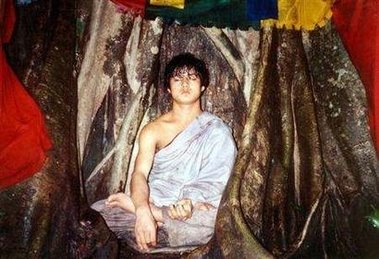
Mystery "Buddha" boy goes missing


Sat Mar 11, 8:45 AM ET

KATHMANDU (Reuters) - Nepali police began hunting on Saturday for a teenaged boy who some people believe is an reincarnation of Buddha after he disappeared from the site where he had been meditating for almost 10 months.

Fifteen-year-old Ram Bahadur Bamjon has not been seen since early Saturday, said Hari Krishna Khatiwada, a district official of Bara, 150 km (95 miles) southeast of Kathmandu.

The boy had been meditating there without food or water since May. Some of his followers are also missing.

"So far we have found no trace of them," Khatiwada said.

Sitting cross-legged beneath a "pipal" tree, which is sacred to Hindus, Bomjon drew more than 100,000 people to the dense forests in southeastern Nepal.

But visitors were only allowed to see him from 50 metres (165 feet) away and the boy was hidden from public view at night behind a curtain drawn by his followers.

Sphere: Related Content

Friday, March 10, 2006

Soldiers die in Nepal 'attack'

Nepal has been fighting a Maoist insurgency for a decade
At least three soldiers have been killed in an attack by suspected Maoist rebels in south-western Nepal, officials say.

Five policemen and a civilian were hurt in the attack on a security checkpoint in Tribhuvan Nagar in Dang district.

The rebels have not commented on Thursday morning's incident.

Violence has escalated across Nepal since the rebels abandoned a four-month unilateral ceasefire in January after the government refused to reciprocate.

A local official told the BBC that the security check post had been sent up to keep a vigil on the movement of suspected Maoist rebels in the area.

Violence

Earlier this week, Maoist rebels freed more than 100 prisoners in an attack on a hill town in eastern Nepal.

At least 12 people, including seven rebels, were also killed in the clashes that followed the attack in Ilam Bazar.

Last week, more than 30 people died in clashes between troops and Maoist rebels in south-western Nepal.

More than 13,000 people have been killed in violence in Nepal since the rebels took up arms 10 years ago.

Sphere: Related Content

Tuesday, January 24, 2006

AP - Tue Jan 24, 6:42 AM ET
Riot police, unseen, use water cannons to disperse activists of Nepal's seven largest political parties during an anti-king demonstration in Katmandu, Nepal, Tuesday, Jan. 24, 2006. Police clashed with pro-democracy protesters Tuesday, firing tear gas and beating activists with batons just hours after authorities lifted a ban on demonstrations in the capital of this Himalayan kingdom. (AP Photo /Aijaz Rahi)
Sphere: Related Content

Sunday, January 08, 2006

AFP/File - Sun Jan 8, 1:48 AM ET
Nepalese soldiers in Kathmandu. Suspected Maoist rebels set off a bomb in a municipal building in southwestern Nepal but caused no casualties.(AFP/File/Devendra M. Singh)
Sphere: Related Content

Thursday, December 15, 2005

Supporters of Nepal's seven major political parties participate in a protest rally against King Gyanendra in Katmandu, Nepal, Thursday, Dec. 15, 2005. Hours after a Nepalese soldier ended an argument with a group of villagers spraying them with bullets and killings at least 11 people, around 15,000 protestors marched through Katmandu demanding the countrys king restore democracy and condemning the killings.
( AP photo/ Binod Joshi) Sphere: Related Content

Tuesday, December 13, 2005

Nepal leader urges India not to back Government headed by King

By: Marcus Dam

External support will make it more repressive: Communist Party of Nepal (UM-L)

# Several smaller political parties of Nepal are joining the pro-democracy movement
# Maoists are slowly veering towards the idea of a peaceful political transformation

KOLKATA: "We urge the Indian Government not to lend any support to the Nepal Government that could end up with the latter turning even more repressive towards the movement for democracy in Nepal," Keshab Badal, former Nepalese Industries Minister and senior leader of the Communist Party of Nepal (Unified Marxist-Leninist), one of the largest mainstream political parties of Nepal that is in the forefront of the anti-monarchy and pro-democracy campaign in that country, said here on Sunday.

"We seek the sympathy of the Indian Government in our endeavours to replace the monarchy in Nepal with a democratic republic. The Government headed by the King is stockpiling arms and procuring weapons in preparation for the bloodiest civil war in the country," Mr. Badal told The Hindu.

The militants belonging to the Communist Party of Nepal (Maoists) are slowly veering towards the idea of a peaceful political transformation to people's democracy in the country, he observed. "We cannot expect them to change [their violent ways] overnight but they seem gradually to be coming around to the point of view of the seven political parties spearheading the pro-democracy movement in Nepal," Mr. Badal said.

The Maoist rebels who had called for a three-month ceasefire that lapsed on December 3 have, under pressure from various international and national groupings including the seven party forum of Nepal's democratic parties, reportedly extended it by another month.

"Talks between the Maoist leaders and us started nearly six months ago and it's been only a month since we [the seven democratic parties and the Maoist rebels] have been able to reach a 12-point understanding for a joint movement against the monarchy and the setting up of a democratic republic in Nepal," Mr. Badal said.

"Several other smaller political parties of Nepal were joining the pro-democracy movement," Mr. Badal said. "There were also other organisations from the civil society like teachers' groups, bar associations and human rights organisations which were coming together and widening the base of the movement.

"The recent reshuffle in the Nepalese Ministry is nothing but a move by the monarchy toward greater oppression of the people by intensifying the repression of the present regime, taking us further from any solution to the present political crisis in Nepal," he said.

Mr. Badal was in the city to lead a procession brought out by the Nepali Democratic Movement Solidarity Forum - a Kolkata-based organisation comprising various organisations supporting the movement for democracy in Nepal. He, along with representatives of the Forum, later addressed a rally in support of "the struggle of the Nepalese people for a sovereign and self-reliant Nepal."
Sphere: Related Content

Monday, December 12, 2005

Nepali women shout anti-monarchy slogans at New Baneshwar in Kathamandu December 12, 2005. The United Women Organisation of Nepal organised an all-women rally demanding a constitutional assembly and a return to democracy.
REUTERS/Gopal Chitrakar. Sphere: Related Content

Friday, November 11, 2005

BBC NEWS | South Asia | Nepal reporters lose court fight

Journalists protest in Kathmandu
Journalists say they are now left with only street protests
Nepal's Supreme Court has refused to block a controversial law that bans criticism of the king and bars private radio stations from broadcasting news.

Although this is not a final verdict, the ruling clears the way for the government to impose the law.

Critics say the law imposes severe curbs on the press but the authorities say they are not stifling the media.

King Gyanendra assumed direct power in February saying politicians had failed to tackle the nation's Maoist rebels.

Vibrant

A three-member bench headed by Chief Justice Dilip Kumar Poudel refused to defer the law, which also introduces much higher fines for defamation.


Now street protests are our last resort. The ruling has crushed hopes of the journalists

Major opposition parties and key donors such as India and the US and international media watchdogs have criticised the law.

The BBC's Sushil Sharma in Kathmandu says Nepal's independent media have been vibrant since the establishment of a multi-party democracy 15 years ago.

But lawyers for media groups who brought the petition to the Supreme Court seeking the deferral now admit defeat.

Ram Krishna Niraula, a lawyer for Kantipur Publications, Nepal largest media group, told Associated Press: "We have lost the case. Though the final decision is yet to come, it has little meaning."

Narayan Wagle, editor the Kantipur newspaper, said: "We have lost our battle in the court. Now street protests are our last resort. The ruling has crushed hopes of the journalists."

Analysts say part of the king's agenda since his takeover has been to crack down on dissent in order, the authorities say, to quell the Maoist insurgency. Sphere: Related Content
Bhutanese refugees take part in a sit-in protest in front of the United Nations Office at Pulchowk in the Nepalese capital Kathmandu, November 11, 2005. The refugees are protesting to attract the attention of the leaders of the South Asian countries taking part in their regional meeting in Dhaka.
REUTERS/Gopal Chitrakar
Sphere: Related Content

Tuesday, November 08, 2005


The son of former Nepal prime minister Lokendra Bahadur Chand was released after being held for almost two weeks by Maoist rebels who had abducted him to press for payments to sugarcane farmers.
(AFP/File/Devendra M. Singh) Sphere: Related Content

Friday, November 04, 2005

Xinhua - English | Search continues for missing climbers in Nepal

www.chinaview.cn 2005-11-04 19:59:37

KATHMANDU, Nov. 4 (Xinhuanet) -- A 30-member rescue team comprising alpinists from Nepal and France and sniffer dogs continued their search Friday for the bodies of 16 climbers hit by the avalanche while attempting to climb Mt. Kanguru.

"There has not been much progress until now," said Bikram Neupane, president of the Himalayan Rescue Association.

Neupane said that all the rescue members will be returning to Kathmandu on Saturday and the meeting will decide whether to continue search operations.

On Thursday, Neupane and French Ambassador Michel Jolivet flew by helicopter in the region to take stock of the rescue mission.

Seven French and 11 Nepali climbers, during their expedition to summit the 6,981-meter Mt. Kanguru, in Narphu valley of Manang district, some 200 km west of Kathmanduwere, buried alive in the avalanche on October 20.

The rescue team last week on Wednesday recovered the body of French climber Bruno Chadrin while the second body of another French climber was retrieved on Tuesday this week.
Sphere: Related Content

Thursday, November 03, 2005


A Nepali boy watches people celebrating the Newar New Year during a parade in the capital Kathmandu November 2, 2005. Newars are the native people of Kathmandu and observe their own calendar according to which Wednesday is the first day of the year 1126. The celebrations continue throughout the day with traditional bands, dances and a motorcycle rally. REUTERS/Gopal Chitrakar
Sphere: Related Content

Tuesday, November 01, 2005

Son of former prime minister abducted in Nepal

1st NOV 09:59 hrs IST
Former Nepal PM's son abducted
- -
Kathmandu: Maoists have abducted Arun Chand, son of former Prime Minister Lokendra Bahadur Chand, from Kailali district of western Nepal, National Human Rights Commission (NHRC) said.

Chand, Executive Director of Basuling Sugar Mills, was abducted from the compound of the sugar mills in Chuha village of Kailali on Thursday, according to the NHRC.

A complaint to this effect was lodged at the commission by Chand's family, four days after the incident.

The Commission has urged the Maoists for his unconditional and immediate release.

However, Maoists have not claimed responsibility for the incident so far.

Meanwhile, the Kantipur reported that a group of about ten Maoists took the ex-prime minister's son away to ''question him''.

''We did not make the incident public hoping that the Maoists would release him soon but it has already been four days and we still don't know his whereabouts,'' the daily quoted family sources as saying.

Employees at the mill said the local Maoists leaders have been pressuring the management of the mill to pay outstanding dues to the farmers, the paper said.
Sphere: Related Content

Monday, October 31, 2005


Reuters - Sun Oct 30, 6:57 AM ET
Nepali journalists from the Periodical Publications Network wear black masks during a protest rally against the government's new media ordinance in Kathmandu October 30, 2005. The new media law prohibits the criticism of the royal family and ban on the FM news broadcast. REUTERS/Gopal Chitrakar
Sphere: Related Content

Two dozen more journalists held in Nepal

Date : 2005-10-31

Kathmandu, 31 October, (Asiantribune.com): Only a day after police arrested 16 journalists from protest rallies in Nepal’s capital, Kathmandu, police crackdown on media workers continued on Oct. 30 with the arrest of over two dozen journalists from demonstrations in the Himalayan kingdom’s eastern town of Dharan.

As on the previous day, these journalists were demonstrating against the recently introduced draconian media ordinance when they were rounded up. Police manhandled the journalists before rounding them up, according to reports.

Among those arrested on Oct. 30 are vice president of the Federation of Nepalese Journalists Sanjay Santoshi Rai, the federation’s Sunsari district chairman Govinda Ghimire, secretary Janak Shree Rai, Himal Rai, Jas Kumar Rai, Kishor Karki, Keshav Ghimire, Dambar Krishna Shrestha, Rimesh Shrestha, Bhim Rai, Sita Mandemba, Bhuwan Lingden, Shaligram Pandey, Raj Kumar Karki, Gopal Dewan, Ikwal Ahmad, Ravin Giri, Babu Ram Subedi, Rajen Pokhrel, Shashi Thapa Subba, Bed Raj Poudel, Harsha Subba, Arjun Pokharel and Pradip Mayongbo.

The latter four are associated with the country’s most powerful media house, Kantipur that has been the main target of Nepal’s autocratic regime in recent days.

Meanwhile, the sixteen journalists arrested on Oct. 29 have been released.

Protests against the draconian media ordinance promulgated in early October gathered steam after government served a 24-hour ultimatum to Kantipur FM, a popular radio station here last week, even while a Supreme Court verdict on a case filed by the FM station against an earlier police raid and seizure of transmission equipment from the radio station was pending.

Supreme Court begins hearing on media-related appeals

Nepal’s Supreme Court has began hearings on two different cases filed against government attempts to muzzle press freedom in the country. The cases include one seeking the annulment of the media ordinance and another seeking return of equipment seized from Kantipur FM.

A special bench of Chief Justice Dilip Kumar Poudel, Justice Kedar Prasad Giri, and Justice Sharada Prasad Pandit are hearing the cases. The hearing will continue Monday.
Sphere: Related Content

Saturday, October 29, 2005


Nepalese police watch people walking at the Durbarmarg in the capital Kathmandu October 28, 2005. Hundreds of people walked to work and most schools and businesses shut down in Kathmandu on Friday as a strike against a new law banning the media from criticizing Nepal's royal family paralyzed the capital city.
REUTERS/Gopal Chitrakar Sphere: Related Content

Friday, October 28, 2005

Opposition to strike over media curbs in Nepal- The Times of India

[ Thursday, October 27, 2005 01:13:15 pmIANS ]
KATHMANDU: Seven major parliamentary parties in Nepal have called for a 24 hour countrywide shutdown on Friday to protest a fresh move by King Gyanendra's government to close down the biggest private radio station in the country.

The seven parties, who formed a coalition to unitedly oppose the monarch's power grab in February, have also asked members of civil society to join them in a human chain around the office of Kantipur FM station on Thursday to prevent a possible effort by the government to close it down.

The agitating parties include the Nepali Congress, the country's oldest and largest, Nepali Congress of deposed and jailed prime minister Sher Bahadur Deuba and the four left parties.

The Central Mass Movement Coordination Committee of the coalition, formed after the royal coup to spearhead a public movement against it, held an emergency meeting on Wednesday evening after the government dealt a fresh blow to Kantipur FM.

The ministry of information and communication sent a letter to the broadcaster on Wednesday, giving it 24 hours to explain why it had not stopped airing news programmes or face the withdrawal of its licence.

The broadcaster, owned by Kantipur, the largest media house in the kingdom, fell foul of the royalist government after February for its opposition to it and defiance of a controversial media ordinance imposed by Gyanendra this month that imposes stringent curbs on the media.

Armed policemen raided Kantipur FM at midnight earlier this month, seizing its broadcasting equipment and preventing its programmes from being aired outside Kathmandu valley.

The US government issued a statement from Washington, condemning the raid and expressing doubts about the fairness of the civic polls to be held on Feb 8 next year in view of the absence of a free media.

The new media decree bans FM stations from broadcasting news, from airing programmes simultaneously from more than two places and any criticism of the king and the royal family.

However, Kantipur FM has challenged the decree in court, saying it violates the freedom of expression guaranteed by Nepal's constitution.

The shutdown called by the opposition comes after a long absence of such disruptions and a lull in violence following a three month unilateral ceasefire called by the Maoist insurgents from Sep 3.
Sphere: Related Content

Saturday, October 22, 2005


AFP - Sat Oct 22, 1:46 AM ET
More than 1,500 Nepalese journalists, teachers, lawyers and other professionals demonstrated in Kathmandu against a strict new press law seen as an attempt by the government to further muzzle the media.
(AFP/Devendra M. Singh)
Sphere: Related Content